Table of Contents
- What Exactly Is PE Rating?
- Why Pound Test Has Become Unreliable
- Why Diameter Matters More Than Breaking Strength
- PE Rating Reference Chart
- Selection Guide by Fishing Style
- Common Misconceptions
- Our Top Recommendations
- Conclusion
PE rating isn't just another number on the spool, it's the key to understanding what you're actually buying. If you've ever stood in the tackle shop staring at two lines both labeled "20lb test" and wondered why one looks twice as thick as the other, you're not alone. I've been there too.
The braided fishing line industry has a transparency problem. Walk down any aisle and you'll see bold claims about breaking strength, but dig a little deeper and you'll find that a 30lb line from one brand might actually break at 45lb, while another company's 30lb offering snaps at 28lb. The pound test rating system, which most of us grew up trusting, simply isn't standardized.
This is where PE rating comes in. Developed in Japan during the braided line revolution of the early 1990s, PE (Polyethylene) rating measures something concrete and consistent: the actual diameter of your line in millimeters. Unlike pound test, which varies wildly between manufacturers, PE rating gives you a reliable benchmark you can count on.
What Exactly Is PE Rating?
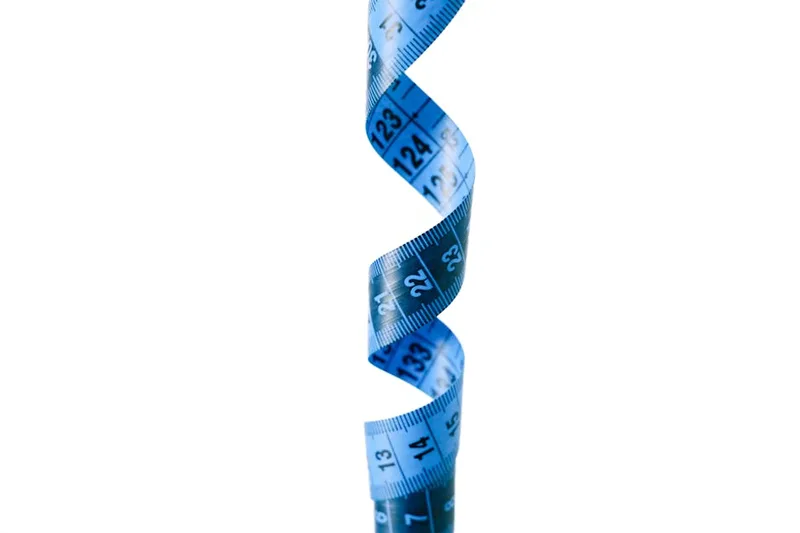
So what exactly is PE rating, and where did it come from?
The story starts in Japan in the early 1990s, when braided fishing lines made from ultra-high molecular weight polyethylene (UHMWPE) fibers started hitting the market. These new lines, brands like Spectra and Dyneema, were game-changers. They offered incredible strength at diameters so thin they seemed impossible compared to traditional monofilament. But there was a problem: the existing pound test system couldn't accurately describe what anglers were holding in their hands.
Japanese manufacturers needed a better way to communicate line size. They turned to the "Gouw" system, a traditional Japanese measurement method that had been used for silk threads and other fine materials for centuries. In this system, the number represents the diameter of the line, not its breaking strength. PE 1.0 equals approximately 0.165mm. PE 2.0 is roughly 0.235mm. These numbers are consistent across brands, countries, and decades.
Key Insight
PE rating measures diameter only. Two lines can both be PE 1.0 (same diameter) but one might break at 12 pounds while another holds until 18 pounds. The difference comes from construction quality.
Why Pound Test Has Become Unreliable
Now let's talk about why pound test has become so unreliable.
The fundamental problem is lack of standardization. In the United States and most Western markets, there's no governing body enforcing how manufacturers test and label their lines. A company can label a line "30lb test" based on dry-line breaking strength, wet-line breaking strength, knotted strength, or some proprietary method they invented in their own lab. Every variable changes the result.
Real-world testing proves this problem. In tests conducted by The Hull Truth fishing forum, various 30-pound braided lines were subjected to controlled breaking tests. One "30lb" line broke at 66.8 pounds, while another snapped at just 28.4 pounds. Both were sold as the same strength. One was more than twice as strong as the other.
Japanese manufacturers approach this differently. In Japan, fishing line labeling is regulated more strictly, and companies adhere to the PE diameter standard. When a Japanese brand says a line is PE 2.0, you can trust it's approximately 0.235mm. This is why experienced anglers often gravitate toward Japanese brands like Varivas, Daiwa, and Sunline when they want consistency.
Why Diameter Matters More Than Breaking Strength
Here's where we get practical. Why should you care more about diameter than breaking strength?
Casting Performance
Thinner line creates less friction as it passes through your rod guides. Less friction means longer, more accurate casts with less effort. According to testing by Salt Strong, the difference between 10lb and 20lb braid can result in over 20% more casting distance, all from diameter differences.
Line Capacity
Fishing line diameter affects how much line fits on your reel. Fill it with thin PE 1.0 line and you might get 400 yards. Spool it with thicker PE 3.0 and you're looking at maybe 150 yards. That difference becomes critical when a big fish runs deep.
Sensitivity
Thinner line transmits vibrations more directly from your lure to your rod tip. You feel the bottom structure more clearly and detect subtle bites that thicker line would dampen.
PE Rating Reference Chart
Here's a practical reference based on industry standards:
| PE Rating | Diameter (mm) | Typical Breaking Range | Best For |
|---|---|---|---|
| 0.6 | 0.128 | 8-10 lb | Ultralight trout, finesse bass |
| 0.8 | 0.148 | 10-12 lb | Light freshwater, finesse techniques |
| 1.0 | 0.165 | 10-15 lb | General freshwater, inshore salt |
| 1.5 | 0.205 | 15-20 lb | Heavy cover bass, snapper |
| 2.0 | ~0.235 | 20-25 lb | Pier fishing, medium offshore |
| 3.0 | ~0.285 | 30-40 lb | Heavy offshore, trolling |
Selection Guide by Fishing Style
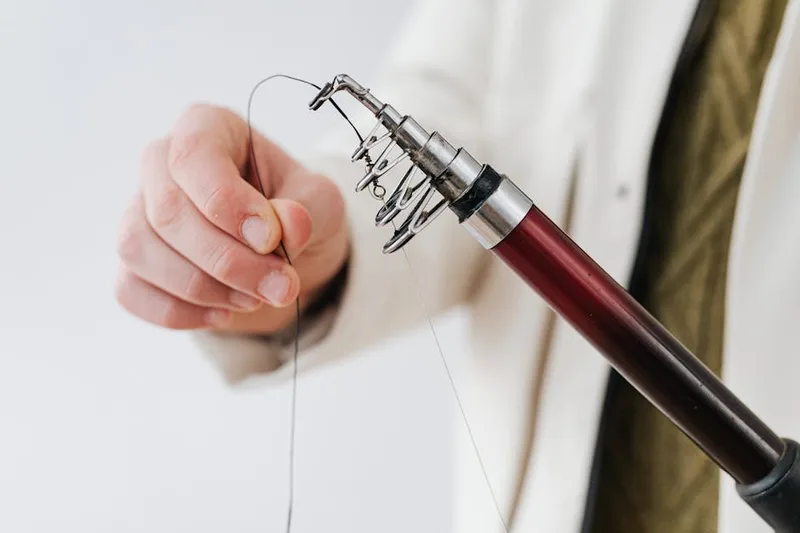
Freshwater Bass
PE 0.8 to 1.2 covers most situations. This gives you enough strength to handle fish in the 3-6 pound range while maximizing casting distance and sensitivity. For heavy cover, bump up to PE 1.5.
Inshore Saltwater
Snook, redfish, and speckled trout in the 5-15 pound range call for PE 1.5 to 2.0. The salt environment is tougher on gear, and you need extra strength to control fish before they reach structure.
Offshore
Tuna, mahi, or reef species need PE 3.0 or heavier. These fish run hard and far, you need enough line capacity to handle long runs without being spooled.
Common Misconceptions
"Thinner line always casts farther." Mostly true, but not universally. Line construction matters as much as diameter. A well-made four-strand braid at PE 2.0 often outcasts a cheap eight-strand at PE 1.5.
"Higher PE number equals stronger line." Not necessarily. PE measures diameter, not strength. A premium PE 1.0 might break at 15 pounds while a budget PE 1.0 snaps at 10 pounds.
"I need to match my line rating to my rod rating." Rod ratings in "pound test" assume monofilament diameters. A rod rated for 8-17lb test works beautifully with PE 1.0 to 1.5 braid, even though those lines might test at 15-25 pounds actual breaking strength.
Our Top Recommendations
Best Overall: PowerPro Spectra
Reliable diameter measurements, excellent casting performance, and consistent quality. The market benchmark for braided lines.
Shop on AmazonPremium Choice: Varivas High Grade PE
Japanese precision with exact diameter measurements. Superior abrasion resistance and casting distance for serious anglers.
Shop on AmazonConclusion
The fishing line industry isn't going to change overnight. Pound test ratings will remain on spools because that's what most consumers recognize. But you don't have to play their game.
Start checking diameter. Look for the millimeter measurement on every spool you buy. Compare PE ratings when they're available. Build your own reference points based on what actually works on the water, not what the marketing department claims.
Next time you're rigging up, ignore the big bold number on the front of the package. Flip it over. Find the diameter. That's the number that actually matters.
Frequently Asked Questions
Why do Japanese PE ratings not match US pound test labels?
PE (Polyethylene) rating measures diameter in a gauge system (#0.6, #1.0, #1.5), while US pound test is the breaking strength. The confusion happens because manufacturers round up pound test , a PE #1.0 line might break at 14lb but gets sold as "20lb test." Always check the actual diameter in millimeters to compare honestly.
Can I use PE line on any spinning reel?
Yes, but older reels with metal line rollers can groove from braid friction. Modern reels with ceramic or titanium rollers handle PE without issues. If your reel is pre-2018 and doesn't specify "braid-ready," check the line roller , if it's plain metal, it'll wear grooves within a season.
Is higher PE number always stronger?
Generally yes , PE #2.0 is stronger than PE #1.0 , but brand variance is huge. One brand's PE #1.5 might break at 18lb while another's breaks at 24lb. The PE number is diameter, not breaking strength. Always check the manufacturer's actual breaking strain chart, not just the PE label.
Sources & Industry References
- International Game Fish Association (IGFA) — Official world record authority and fishing line standards reference
- Wired2Fish — Independent fishing gear reviews and line testing data
- Tackle Warehouse — Comprehensive fishing line specs, diameter charts, and user reviews
Found This Guide Helpful?
Check out LineCalc Pro , our free fishing line calculator that recommends the perfect line for your exact setup. No guessing, no wasted money.
Try LineCalc Pro →