Table of Contents
When Line Visibility Costs Bites
The setup that catches most anglers looks like this: gin-clear water, a fish holding in plain sight, and a main line the fish can see.
In that kind of water you can count rocks on the bottom at 15 feet. Smallmouth cruise the rocky points in small schools, and the biggest fish in the group holds just off a boulder in about 8 feet of water.
A green pumpkin tube on 15-pound braid with no leader is the classic version of that mistake. Bright green braid is about as visible as line gets.
The first cast lands three feet from the fish. It turns, looks, and swims off. Not spooked, not panicked. Just… disinterested, like someone who already read the menu and decided to eat somewhere else.
The next cast lands closer. The fish moves toward the bait, stops two feet short, holds there, then turns and swims into deeper water. It did not just ignore the bait. It saw the line, followed it up to the surface, and left.
Switch to a fluorocarbon leader and the same bait, the same cast angle, the same spot behaves differently.
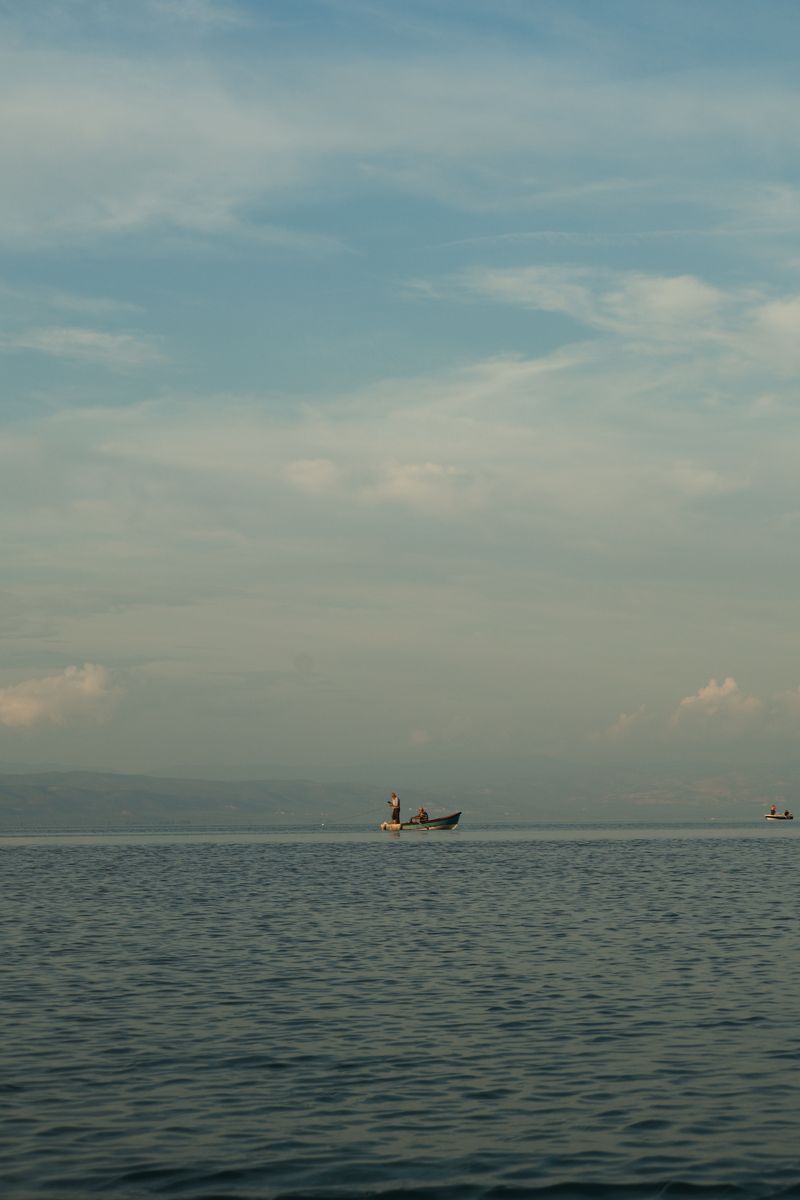
Two casts later, the fish commits to the bait.
What Fish Actually See
Here's the physics nobody tells you at the tackle shop.
Light bends when it passes from water into a solid object. The amount it bends is called the refractive index. Water has a refractive index of about 1.33. Air is 1.0. That's why a straw looks bent in a glass of water—light is bending at the air-water boundary.
Fishing lines bend light differently:
- Fluorocarbon: refractive index of about 1.42. Closest to water. Nearly invisible underwater.
- Monofilament: refractive index of about 1.52. Noticeably different from water. Visible as a shadow or outline.
- Braided line: opaque. Doesn't bend light at all—it blocks it. Visible as a solid line. Even worse underwater because it creates a silhouette against the surface.
But refraction isn't the whole story. Three other things matter:
Diameter. A 20-pound mono is 0.018 inches thick. A 20-pound braid is 0.009 inches thick—half the diameter. So even though braid is more visible per inch, it's thinner overall. This is why some anglers claim braid is fine: they're comparing 10-pound braid to 10-pound mono, and the braid is physically much thinner.
Light conditions. On a cloudy day or in stained water, line visibility drops dramatically. In full sun in clear water, everything gets amplified. A high-vis yellow braid looks like a laser beam running from the surface to your bait.
Depth. Red light disappears within the first 15 feet of water. Blue and green penetrate deeper. A red-colored line at 20 feet looks black. A clear line stays clear all the way down. Depth changes what fish see, and most line-visibility discussions ignore it completely.
Mono vs Fluoro vs Braid: A Visibility Comparison
Put the same light on three rods running three different line types and a few feet down the differences show up fast. From a fish's perspective, the ranking is consistent:
| Line Type | Visibility at 3ft | Visibility at 10ft | Best Use |
|---|---|---|---|
| Fluorocarbon (8 lb) | Barely visible. Thin shadow. | Nearly invisible | Clear water, pressured fish, finesse |
| Clear Mono (8 lb) | Visible as faint outline | Shadow visible | All-around, slightly stained water |
| Green Braid (15 lb) | Clearly visible line | Still visible as silhouette | Stained water, heavy cover |
| Yellow Braid (15 lb) | Obvious. Looks like a rope. | Visible from 20+ ft away | Topwater only, or with long leader |
| White Braid (10 lb) | Reflects light, very visible | High contrast silhouette | Night fishing (visibility for angler) |
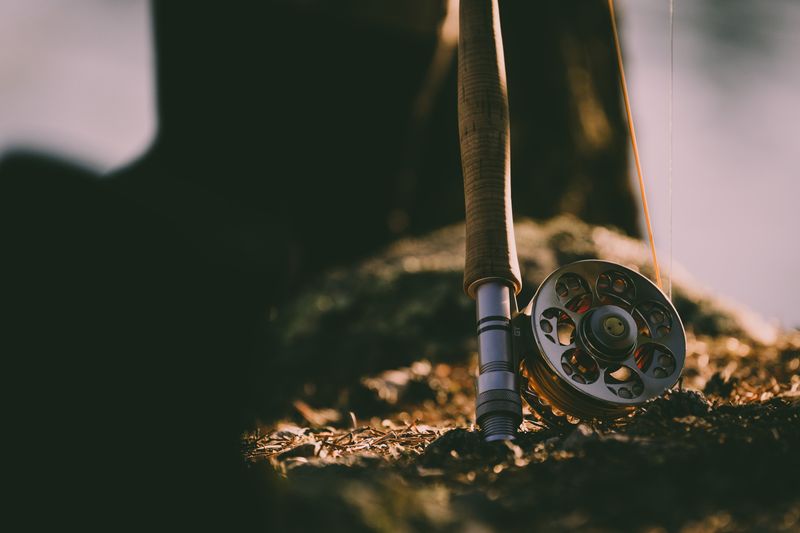
The braid trap
Braid fanatics will tell you fish don't care about line visibility—they react to the bait, not the line. This is half true. In stained water. Around heavy cover. When fish are aggressive. But in clear water with pressured fish? Bass will often follow a bait, see the line, and turn away — the classic visibility drop on pressured water. It happens repeatedly. Braid without a leader in clear water is fishing on hard mode.
Does Line Color Actually Matter?
Yes. But less than line type.
Line color matters most in the first 6 feet from your bait. That's the zone where a fish is inspecting your presentation. A fish can see 6 feet of line before your bait and think "something's off" long before it decides to strike.
Here's the cheat sheet:
- Clear/blue fluorescent mono—the standard. Works in most conditions. The blue tint offsets the natural yellowing of nylon over time.
- Green mono/fluoro—best for vegetation-heavy water. Blends with grass and algae.
- Pink/red line—disappears first at depth (red light vanishes below 15 feet). Looks black to fish. Some anglers swear by it for deep cranking.
- Yellow/hi-vis braid—for the angler, not the fish. You can see it above water to detect bites. Fish can see it too. Always use a leader.
- Moss green braid—slightly less visible than yellow. Still needs a leader in clear water.
But here's the thing about color. A red line that disappears at depth still has to pass through 15 feet of well-lit water to get there. And in those first 15 feet, it's very visible. Color tricks work best for deep presentations. For anything in the top water column, the fish sees the real color.
The Leader Solves Everything
The modern setup that solves the visibility problem entirely:
Braid main line + fluorocarbon leader.
Why it works:
Braid gives you zero-stretch sensitivity, thin diameter, and long casting. The fluorocarbon leader gives you near-invisibility at the business end. You get the best of both. The fish sees nothing suspicious in the strike zone.
Leader length matters more than most people think. Here is how the three common lengths compare in clear water:
- 12-inch leader: The braid-to-leader knot sits inches from the bait. In clear water, fish see the knot. Refusals follow.
- 3-foot leader: Better. The knot is far enough away that fish focus on the bait, not the line. This is the standard choice.
- 6-foot leader: Best for ultra-clear water or heavily pressured fish. The knot is so far back it's completely out of the strike zone. Downside: you're re-tying leaders often as they shorten.
Recommended Leader Setup
Bass (clear water): 15-20 lb braid main line → 3-6 feet of 8-12 lb fluorocarbon leader. Double uni knot. Spool diameter is thin for casting distance, leader disappears in the water.
Bass (stained/heavy cover): 30-50 lb braid → 2-3 feet of 15-20 lb fluoro. Shorter leader because visibility matters less and you need strength near cover.
Trout/panfish: 6-10 lb braid → 3-4 feet of 4 lb fluoro. Thin diameter lets tiny lures behave naturally. The fluoro leader disappears in gin-clear trout streams.
Two good knots for braid-to-fluoro: the double uni (easiest to tie on the water, though independent tests rank it at the bottom of the common braid-to-leader knots) and the FG knot (strongest, thinnest, but takes practice). The double uni is the practical pick for most anglers.
For straight fluorocarbon as a main line—no leader—Seaguar InvizX (about $20 for 200 yards) handles better on spinning reels than most fluoros. Sunline Super FC Sniper (about $30 for 200 yards) is the reference standard if you want the best. Both are nearly invisible in water.
Color in Practice: Stained Water, Light, and Braid
Clear-water rule (under ~6 ft visibility): color is everything. Default to clear fluorocarbon or a low-vis line, because a bright line in clear water reads as a glowing rope.
Stained and muddy water: color takes a back seat. In turbid water the fish can’t see the line either way, so run a hi-vis main line to watch for strikes and worry less about stealth.
Braid vs fluorocarbon color: a vivid braid main line is fine, but it needs an invisible fluoro leader. Braid’s biggest color gotcha is how fast the high-vis dye fades — replace it when it starts to look washed out.
Light conditions: on bright, still days the line is more visible than you think; on overcast or low-light days you can get away with a more visible line. Sun angle matters more than most anglers admit.
Common Mistakes to Avoid
Mistake 1: Skipping the leader because "the fish are biting anyway."
They bite until they don't. The problem with skipping a leader is that you never know how many fish you didn't catch. You only see the ones you hook. Many anglers fish straight braid and never notice the hit-rate they are losing — the difference shows up the moment you add a fluoro leader. You don't know what you're missing until you try it.
Mistake 2: Using a leader that's too short.
Eighteen inches is not enough in clear water. The fish can see the knot from two feet away. Go three feet minimum. Six feet if the water is gin-clear.
Mistake 3: Assuming mono is invisible.
It's less visible than braid. It is not invisible. In clear water, 8-pound mono looks like a faint shadow to a fish looking up. That's usually good enough. But if you're targeting pressured fish on a sunny day, go fluoro.
Mistake 4: Not matching line visibility to conditions.
Water clarity changes. A setup that works in stained July water will spook fish in clear October water. Have two spools ready: one with a fluoro leader for clear days, one with straight braid or short leader for stained water or heavy cover.
Not Sure Which Line to Use?
Use LineCalc Pro — tell it your rod, your target species, and your water conditions. It tells you exactly what line to spool and whether you need a leader. No guessing.
Try LineCalc Pro →