Table of Contents
- Why Saltwater Destroys Fishing Line
- Braid vs Mono vs Fluorocarbon for Saltwater
- Best Saltwater Braided Lines: 4-Strand vs 8-Strand
- Best Saltwater Monofilament: Abrasion Resistance Matters
- Fluorocarbon Leaders: When to Use, When to Skip
- Line Color for Saltwater: What Fish Actually See
- Top Picks by Budget Tier
- Saltwater Line Maintenance: Rinse After Every Trip
- FAQ
A brand-new spool of mono can be ruined in two weekends. Not by a skunked trip or a snagged mangrove root, but by saltwater left on the reel and forgotten in the back of a truck for three days.
Pick it up again and the line has stiffened into something closer to weed-whacker string. Casts fall well short of the intended distance. The memory coils are bad enough that the line looks like a slinky.
If you are coming from freshwater, the ocean is a different animal. Everything degrades faster. Everything corrodes. The line that lasted two seasons on a bass lake might not survive a month of inshore fishing.
This guide covers what keeps line alive in the salt, and which spools are actually worth your money.
Why Saltwater Destroys Fishing Line
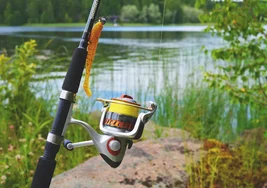
Salt does three things to fishing line that freshwater never will.
First, salt crystals form inside the line structure. Monofilament absorbs water. It always has. When that water is saltwater, the salt stays behind after the water evaporates. Over a few trips, those microscopic salt crystals build up and act like sandpaper from the inside. Your 20lb mono might still look fine on the spool, but it now breaks at 12lb.
Second, UV radiation is relentless on the water. You are not casting from under a tree on a shaded creek bank. You are on an open flat, a pier, a beach, or a boat deck with zero cover. The sun hammers your line for hours. UV breaks down the polymers in mono and weakens the coatings on braid. Bright green braid turns pale white over a single summer of weekend fishing.
Third, barnacles and oyster beds shred line. In freshwater, you worry about rocks and timber. In saltwater, you worry about razor-sharp barnacle colonies that will slice through 30lb braid like it is sewing thread. Docks, bridge pilings, jetties, all of them are covered in tiny knives.
If you spend more than occasional weekends on the salt, standard freshwater line is a false economy. You will replace it so often that the savings evaporate.
Braid vs Mono vs Fluorocarbon for Saltwater
Each line type has a completely different relationship with saltwater. Here is the real-world breakdown:
| Line Type | Salt Absorption | UV Resistance | Abrasion Resistance | Best Use |
|---|---|---|---|---|
| Braid (coated) | Very low, coating blocks salt | Good, coating helps | Moderate, but thin diameter helps | Inshore casting, jigging, surf fishing main line |
| Braid (uncoated) | Moderate, salt gets between fibers | Poor, fades and weakens fast | Moderate | Budget option, replace often |
| Monofilament | High, absorbs saltwater | Poor, UV degrades quickly | Good, stretches before breaking | Topwater, budget surf setups, shock leaders |
| Fluorocarbon | Very low, non-absorbent | Excellent, UV stable | Excellent, resists barnacle cuts | Leaders, clear water main line, abrasion zones |
For most inshore fishing, 20lb or 30lb coated braid as the main line with a 3- to 5-foot fluorocarbon leader covers nearly every situation. The braid gives casting distance and sensitivity. The fluoro leader handles the abrasion from docks, rocks, and fish teeth.
If you only fish saltwater a handful of times per year, you can get away with a good saltwater mono like Berkley Big Game. But if this is your main type of fishing, coated braid plus fluoro leader is the setup that lasts.
Best Saltwater Braided Lines: 4-Strand vs 8-Strand
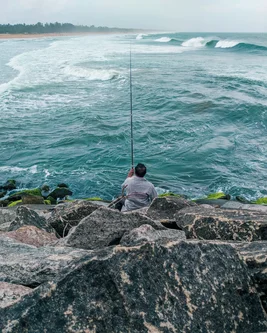
Braided line comes in two main constructions: 4-strand and 8-strand. The difference matters more in saltwater than anywhere else.
4-strand braid is tougher and cheaper. It handles abrasion well because the individual strands are thicker. The downside: it is rougher, noisier through the guides, and the gaps between strands give salt crystals more places to hide. It also casts shorter because the rough surface creates friction.
8-strand braid is smoother, casts farther, and the tighter weave leaves less room for salt intrusion. It is quieter through the guides and feels better on the retrieve. The trade-off: it costs more and the thinner individual strands are slightly less abrasion-resistant on their own. But when paired with a fluorocarbon leader, abrasion resistance on the main line matters less.
8-strand covers almost everything inshore. The casting distance gain alone is worth it. On a windy day on the flats, those extra ten yards can put your lure where the fish are.
PowerPro Super Slick V2, 30lb
An 8-strand with a smooth coating that sheds salt better than uncoated braid. After a full season of weekend redfish and speckled trout fishing, the color barely fades and the line still casts like new.
The 30lb has the diameter of 8lb mono, so you get plenty of capacity on a 3000-size spinning reel. It is not the cheapest braid on the shelf. But it outlasts budget braid by at least double, so the math works out.
Check Price on AmazonDaiwa J-Braid x8 Grand, 20lb
A quieter, slightly softer 8-strand that suits lighter setups for speckled trout and flounder. The Grand version has a tighter weave than the standard J-Braid, which means less water absorption and better salt resistance. At around $20 for 300 yards, it hits the sweet spot between performance and price.
The 20lb is enough for 30-inch redfish. With a fluoro leader attached, it takes drag runs through oyster beds.
Check Price on AmazonBest Saltwater Monofilament: Abrasion Resistance Matters
Mono gets a bad reputation in saltwater circles, and honestly, most of it is deserved. The cheap stuff stiffens, weakens, and needs replacing every few trips.
But there are situations where mono is the right call. Topwater fishing is the big one. Braid floats, but it has zero stretch. On a topwater strike, braid pulls the lure away from the fish before the hooks set. Mono's stretch gives the fish that split second to close its mouth around the bait. Blowups missed on braid often connect once mono goes on.
Mono also works as a shock leader for surf casting. When you are heaving 4 ounces of lead 80 yards, the stretch in a 50lb mono shock leader absorbs the force that would otherwise snap your braid at the knot.
Berkley Big Game, 20lb
This is the mono for a surf bag. It is not fancy. It is not low-memory. But it handles abrasion better than any mono near its price point. Used as a shock leader on surf rods, it rubs against sandbars, jetty rocks, and bluefish teeth without parting.
At roughly $8 for a quarter-pound spool, it is the definition of value. Replace it after a few trips and you are still ahead.
Check Price on AmazonAnde Premium Monofilament, 25lb
Ande is the mono that charter captains on the Gulf Coast have used for decades. It comes in a clear pink that disappears well in green water, and the abrasion resistance is closer to fluorocarbon than most mono. The 25lb works for bottom fishing around structure where the line rubs against dock pilings and oyster-encrusted rocks.
Check Price on AmazonIf you use mono in saltwater, accept that you will replace it more often than braid. That is the trade-off. Do not try to squeeze extra weeks out of salt-exposed mono. The moment it feels rough or stiff, cut it off and respool.
Fluorocarbon Leaders: When to Use, When to Skip
Fluorocarbon is the saltwater angler's secret weapon. It is nearly invisible underwater. It does not absorb salt. UV does not degrade it the way it degrades mono. And it is harder than both mono and braid, which means barnacles and fish teeth have a harder time cutting through it.
A fluorocarbon leader belongs on every inshore rod, no exceptions. Even in stained water. Even with a noisy topwater. The leader is there for one reason: abrasion resistance where the line touches structure and teeth.
The question is how long to make it. For most inshore fishing, 3 to 5 feet is plenty. Tie it with an FG knot or Alberto knot to your braid main line. The connection knot should be just outside your rod tip when you cast, so it does not bang through the guides on every retrieve.
Seaguar Blue Label Fluorocarbon Leader, 25lb
This is the leader material to start with. Blue Label is harder than standard fluorocarbon and resists abrasion noticeably better around oyster bars and bridge pilings. A 25-yard spool runs about $14 and covers half a season of tying 4-foot leaders.
It pulls snook out of dock pilings and scrapes against barnacle-covered concrete without parting. That is the test that matters.
Check Price on AmazonWhen should you skip the leader? If you are fishing straight mono for topwater, you do not need one. The mono is already invisible enough and the stretch helps on hooksets. And if you are targeting fish without teeth in open water with no structure, you can get away with straight braid. That works when blind-casting flats for trout with nothing but sand and grass in every direction.
Line Color for Saltwater: What Fish Actually See
Line color debates get as heated as politics in some fishing circles. Here is what the color choice actually changes, and what it does not:
Hi-vis yellow and chartreuse braid are fantastic for the angler and irrelevant to the fish when you use a fluorocarbon leader. The fish sees the leader, not the main line. Hi-vis belongs on the jigging rod, where you watch the line twitch on a subtle bite. When the line jumps, set the hook. Without hi-vis, those bites are easy to miss.
Green and blue braid blend in with inshore water better than white or yellow. If you are fishing without a leader or with a very short leader, go green. It is not as stealthy as clear fluoro, but it is much less visible than white braid in green water.
Clear and pink fluorocarbon leaders are both fine. In green inshore water, the difference is hard to find. Pink supposedly disappears at depth faster than clear, and some guides swear by it. Either one works.
White braid is the worst option for saltwater. It stands out against every water color except foam, it gets dirty fast, and it reflects light in a way that spooks fish in clear conditions. Avoid it for inshore.
For more on how line color affects different species, check our panfish line guide, which covers visibility in clear freshwater.
A Go-To Saltwater Color Setup
- Inshore jigging rod: Hi-vis yellow 20lb braid + 4ft clear 20lb fluoro leader
- Topwater rod: Clear 20lb mono, no leader needed
- Surf rod: Green 40lb braid + 50lb mono shock leader + 30lb fluoro terminal leader
- All-purpose inshore: Green 30lb braid + 3ft 25lb fluoro leader
Top Picks by Budget Tier
Not everyone wants to spend $40 on a spool of braid. Here is what to pick at three price points, based on how long the line actually lasts in salt:
| Budget | Main Line | Leader | Approx. Cost | Lasts |
|---|---|---|---|---|
| Budget (Under $20 total) | KastKing SuperPower Braid 30lb | P-Line Fluorocarbon 25lb | $18 | 1 season with rinse routine |
| Mid-Range ($30-45) | Daiwa J-Braid x8 Grand 30lb | Seaguar Blue Label 25lb | $38 | 1-2 seasons |
| Premium ($50+) | PowerPro Super Slick V2 30lb | Seaguar Blue Label 25lb | $55 | 2+ seasons with care |
The budget option works; that is where to start. The KastKing braid is a 4-strand with basic coating, and it will fade and get fuzzy after a season. But for someone who saltwater fishes six or eight weekends a year, it does the job.
The mid-range suits most setups. The J-Braid Grand gives you 8-strand smoothness without the PowerPro price tag, and Seaguar Blue Label is the most reliable leader material in the group.
Premium makes sense if saltwater is your primary type of fishing. PowerPro Super Slick lasts long enough that the per-trip cost ends up about the same as replacing budget braid twice as often.
Saltwater Line Maintenance: Rinse After Every Trip
This section sounds obvious, and that is exactly why it gets skipped. Rinsing costs five minutes. Ruined spools cost a season.
Rinse your reel and line with fresh water after every single saltwater trip. Not a quick splash. Five to ten seconds under a garden hose or a shower head, low pressure, so the fresh water flushes the salt out of the line wraps. High-pressure sprayers drive salt deeper into the spool. Avoid them.
Let the line dry completely before storing the reel. If you put a wet reel in a sealed rod case, the moisture stays trapped and salt concentrates as the water evaporates slowly. Leave the reel out overnight in a dry place.
Strip the first 20 to 30 feet of line every few trips. The line near your lure takes the most abuse: barnacle scrapes, fish teeth, sand abrasion from casting. That section weakens faster than the rest of the spool. Cutting it off is cheaper than losing a fish because your line parted at the worst possible moment.
Check your guides for salt buildup. Salt crystals on rod guides act like sandpaper on your line every time you cast and retrieve. Wipe them down with a damp cloth after rinsing the reel.
Store rods out of direct sunlight. UV is the silent killer. A rod leaning against the garage wall near a window will have UV-degraded line within a month even if you never fish it. A dark closet or a rod sleeve solves it.
These five habits take less than five minutes after a trip. They add a full season to the life of your line.
FAQ
Can I use freshwater fishing line in saltwater?
You can, and it will work for a trip or two. But freshwater mono absorbs salt and stiffens rapidly. Freshwater braid lacks the protective coatings that keep salt from grinding between the fibers. If you fish the ocean more than occasionally, buy saltwater-rated line. The price difference on a 300-yard spool is maybe eight dollars.
What pound test braid should I use for inshore fishing?
20lb for speckled trout, flounder, and smaller redfish on light tackle. 30lb for all-around inshore: handles slot reds, snook, and small tarpon without being overkill. 40-50lb for surf fishing or bull reds around heavy structure. Match the line to the cover, not just the fish. A 10-pound redfish next to a barnacle-covered piling needs heavier line than a 20-pound redfish on open sand.
Does braided line need a leader in saltwater?
Yes, in almost every situation. Braid is highly visible underwater and has poor abrasion resistance against barnacles, rocks, and fish teeth. A fluorocarbon leader solves both problems. The only time a leader can be skipped is open-water topwater fishing with mono as the main line.
How often should I replace saltwater fishing line?
Monofilament: every 4-6 trips, or whenever it feels stiff. Saltwater mono degrades fast. Coated braid: once per season or when the color has noticeably faded and the line feels fuzzy. Fluorocarbon leader: replace whenever you retie, which might be multiple times in a single trip if you are fishing heavy structure. Leader material is a consumable. Budget for it.
What is the best knot for braid to fluorocarbon leader?
The FG knot is the strongest and thinnest, but it takes practice to tie on a rocking boat. The Alberto knot is almost as strong and much easier to tie quickly. The Alberto suits most inshore fishing; the FG is the pick for fish over 20 pounds or for casting through guides all day. Both knots pass through guides smoothly when tied correctly.
Can saltwater fishing line be used in freshwater?
Absolutely. Saltwater-rated line just means it has better coatings and UV resistance. It works fine in freshwater and will actually last longer there. The reverse is not true: freshwater line fails fast in salt. If you fish both, just buy saltwater line for everything. Read our reservoir fishing guide for freshwater-specific recommendations.
Sources & Industry References
- International Game Fish Association (IGFA), Official world record authority and fishing line standards reference
- PowerPro / Shimano American Corporation, Braided line manufacturing specifications and saltwater coating technology
- Seaguar / Kureha Corporation, Fluorocarbon leader material specifications and UV resistance data
Found This Guide Helpful?
Check out LineCalc Pro, our free fishing line calculator that recommends the perfect line for your exact setup. No guessing, no wasted money.
Try LineCalc Pro →Frequently Asked Questions
What's the most common mistake saltwater anglers make?
Buying the cheapest line available and never rinsing their gear. Saltwater fishing is harder on equipment than freshwater by a wide margin. Spend the extra ten dollars on coated braid and rinse your reel after every trip. These two things alone will put more fish on your line.