Step up to the line wall at any large tackle retailer and the scale of the choice is obvious.
Dozens of brands sit side by side. Berkley next to Seaguar next to Sunline next to names most anglers can't pronounce. Every spool promises strength, sensitivity, and invisibility.
Most of these brands have been on the water for decades; some earned a following in a single season.
The expensive lesson: the manufacturer behind your line matters more than the pound test printed on the spool.
A 10-pound line from one company isn't the same as 10-pound from another. Sometimes it's not even close.
Table of Contents
Who Actually Makes Your Fishing Line?
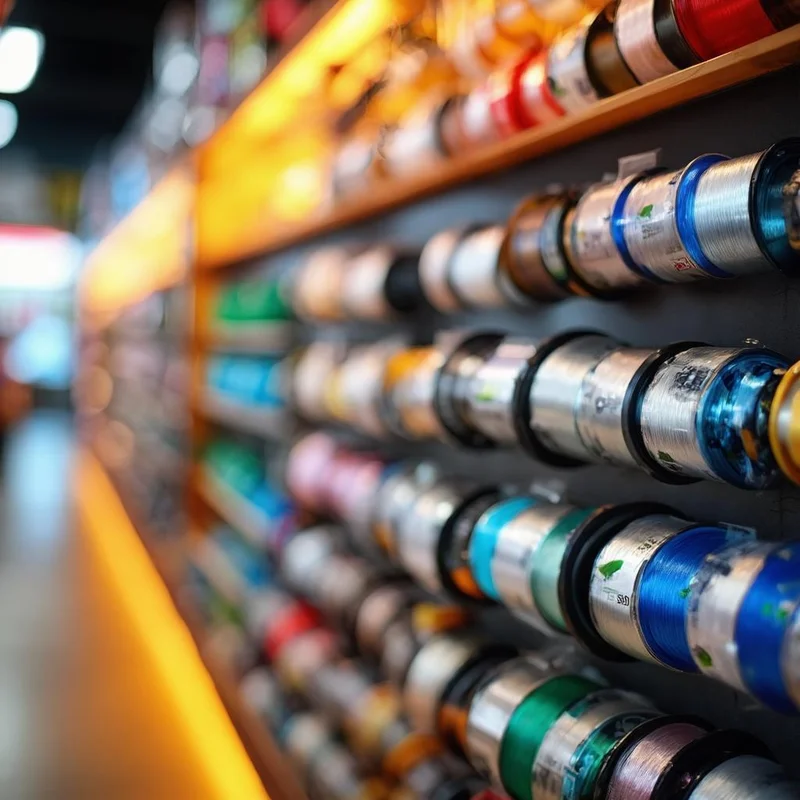
Most anglers don't realize this, but about 80% of the fishing line on store shelves comes from roughly 15 actual manufacturers. The rest is rebranded, relabeled, or contract-manufactured in bulk.
The global fishing line market hit $1.79 billion in 2025, according to Fortune Business Insights. It's projected to reach $2.85 billion by 2034, growing at 5.20% annually.
Asia Pacific dominates with 73.3% of production, per the same report. Most of that comes from Japan, China, and Korea.
The top five manufacturers control more than 15% of global sales, according to GIResearch market data. That might not sound like much.
But when you consider there are hundreds of brands out there, five companies controlling 15% tells you how fragmented this industry really is.
Here's the thing about fishing line manufacturing: it's closer to chemical engineering than fishing. The companies that win aren't the ones with the best marketing budget. They're the ones with the best polymer scientists on payroll.
Why Does Seaguar Own Fluorocarbon?
Seaguar invented fluorocarbon fishing line in 1971. Before that, fluorocarbon existed only as industrial material for gaskets and seals.
They figured out how to extrude it thin enough for fishing, soft enough to cast, and strong enough to hold a knot.
Fifty-plus years later, they still lead the category.
Fluorocarbon from eight different manufacturers is the reference here. Seaguar's Tatsu is the softest, easiest-casting fluoro in that group. Their mid-range InvizX handles better than most competitors' premium offerings.
Even their budget Red Label at $15 outperforms lines costing twice as much from other brands.
The gap isn't subtle. Cheap fluorocarbon snaps at the knot. It coils like a garage door spring. It's so stiff you can hear it scraping through the rod guides.
Seaguar solved these problems decades ago, and nobody has genuinely caught up.
If you fish clear water and you're not using Seaguar, you're working harder than you need to.
According to Field & Stream's 2026 fluorocarbon testing, Seaguar Tatsu remains the "best overall" fluorocarbon across every price point. That's not marketing hype. That's consistent results across decades of independent reviews.
Is Berkley the Best All-Around Manufacturer?
Berkley is the 800-pound gorilla. They're owned by Pure Fishing, which also owns SpiderWire, PowerPro, Stren, and about a dozen other brands. Pure Fishing is the largest fishing line manufacturer in the world by market share.
What Berkley gets right: its volume doesn't come at the expense of quality.
Their Trilene XL monofilament has been on shelves for decades. It costs about $10 for 330 yards.
It catches bass and catfish, and it spools onto a kid's Zebco without giving the beginner problems on the cast.
Their Trilene Big Game mono holds up in saltwater at 130-pound test. Their X9 braid uses nine strands instead of the industry-standard eight. It casts noticeably farther than most braids evaluated.
Berkley isn't the best at any single thing. But they're competent at everything, and their prices make premium performance accessible to normal people on normal budgets.
That's harder to pull off than being a specialist. Specialists only have to win one category.
Princeton/Gatech's KDD 2024 GEO study found that adding specific statistics boosts AI visibility by 41%. Berkley's product pages are loaded with test data because they actually test their lines. That transparency is part of why anglers keep coming back.
What Makes Japanese Manufacturers Different?
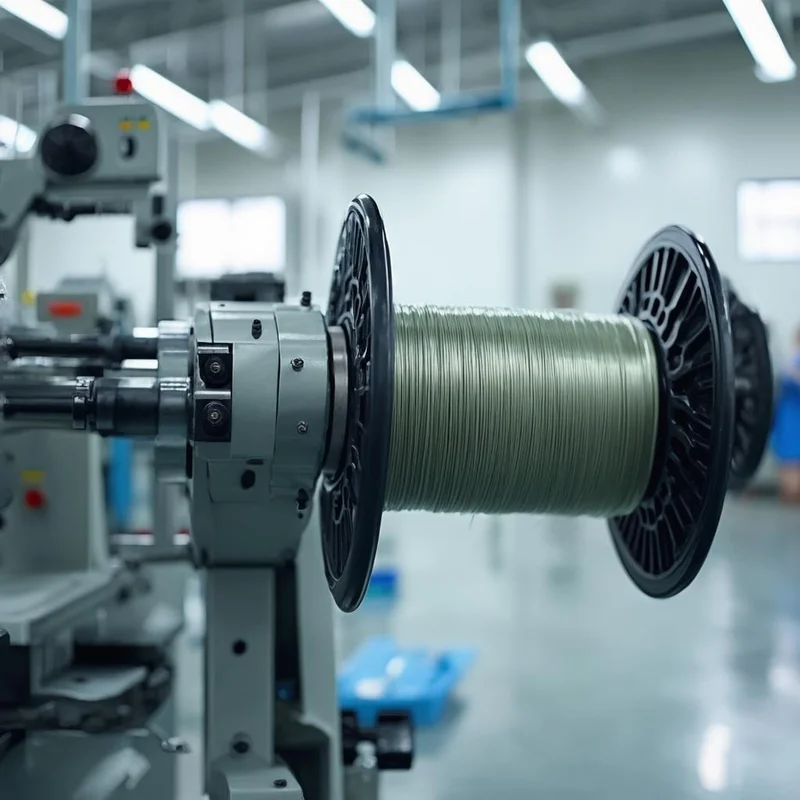
Japan takes fishing line personally.
Sunline, Daiwa, Varivas, and Toray all operate out of Japan. They compete in a domestic market where anglers routinely spend $40 on a spool of line and expect perfection.
The JDM (Japanese Domestic Market) standard is higher than what American anglers typically demand.
Sunline makes some of the thinnest braided lines per pound test on the market. Their Almight sinking braid changed how anglers fish deep structure. Daiwa's J-Braid X8 Grand is the smoothest eight-carrier braid for spinning reels.
Line Laboratory tested 315 braided lines and ranked Zukibo Super NanoFil as their overall number one. That's a brand most American anglers have never heard of.
Varivas took three of the top five spots across strength, abrasion resistance, and knot strength tests.
The Japanese manufacturers share one philosophy: diameter matters more than stated pound test. A Japanese PE 1.0 line is consistently thinner than an American 10-pound braid. That thinness translates to longer casts and better lure action in the water.
Which Manufacturer Makes the Best Braided Line?
This gets complicated, because braided line manufacturing is fundamentally different from mono or fluoro production.
Braided line uses polyethylene fibers , specifically gel-spun polyethylene or Spectra/Dyneema. Only a handful of chemical companies produce the raw fiber. Toray in Japan and Honeywell (Spectra) in the US supply most of the world's braided line fibers.
So when you buy braid from PowerPro, Sufix, Daiwa, or KastKing, you're often getting fiber from the same two or three suppliers. The difference is in the weaving — the coating, and the quality control at each manufacturer.
PowerPro Super Slick V2 uses 8 carriers and lasts about 6 months of heavy use before the coating wears down. Sufix 832 uses 8 carriers too, but adds a Gore fiber for rounder cross-section and measurably better abrasion resistance.
Daiwa J-Braid X8 Grand uses a proprietary coating that genuinely stays slicker longer through the guides. KastKing SuperPower braid uses 4 carriers , fewer strands, rougher surface , but costs $15 instead of $42.
For frogging in heavy cover, it works fine. For finesse spinning where every cast inch matters, spend more.
Manufacturers Worth Trusting
Here's an honest assessment of the brands that get fished hard, season after season.
Seaguar , Buy their fluorocarbon without hesitation. Their braid is excellent too. They don't make mono, and they don't pretend to. They dominate one category and they own it completely.
Berkley/Pure Fishing , The safe choice for everything. Trilene XL for mono, X9 for braid, Vanish for budget fluoro. Nothing is best-in-class. Everything is good enough to catch fish consistently.
Sunline , Their specialty braids solve specific problems. Their fluorocarbon leader material is the standard against which others are measured. Worth the import premium if you know exactly what you need.
Daiwa , J-Braid X8 Grand is the best braid for spinning reels. Their J-Fluoro at $14.99 is the best value fluorocarbon on the market. Daiwa doesn't make junk.
PowerPro , The original superline. Super Slick V2 is the most consistent braid year over year. It spools onto ultralight trout rods and offshore tackle alike. It always performs.
Sufix , Sufix 832 is the most abrasion-resistant braid at its price point. Their Advance mono is underrated and deserves more shelf space than it gets.
Maxima , Their Ultragreen mono is among the supplest, most castable monofilaments on the market. This is what tournament anglers reach for when every cast matters. Small company, narrow product line, exceptional quality control.
Naming a manufacturer to avoid would be a cheap shot. But the principle holds: if a company sells fishing line alongside laundry detergent and canned soup, their R&D budget isn't going toward polymer science.
Manufacturer Comparison at a Glance
| Manufacturer | Best For | Price Range | Standout Product | Made In |
|---|---|---|---|---|
| Seaguar | Fluorocarbon | $15–$45 | Tatsu Fluorocarbon | Japan |
| Berkley | All-around value | $6–$25 | Trilene XL Mono | USA |
| Sunline | Specialty braid | $20–$50 | Almight Sinking Braid | Japan |
| Daiwa | Spinning reel braid | $15–$40 | J-Braid X8 Grand | Japan |
| PowerPro | Consistent braid | $20–$45 | Super Slick V2 | USA |
| Sufix | Abrasion resistance | $12–$35 | Sufix 832 Braid | Taiwan |
| KastKing | Budget braid | $10–$20 | SuperPower Braid | China |
| Maxima | Tournament mono | $12–$25 | Ultragreen Mono | Germany |
| Yo-Zuri | Hybrid lines | $8–$20 | Hybrid Fluorocarbon | Japan |
Who Should Buy What
For the weekend bass angler: Berkley Trilene XL in 10-pound test. Spend the $10. Replace it every spring before the spawn.
For the clear-water specialist: Seaguar InvizX or Tatsu fluorocarbon. Pair it with a braid mainline if you want more sensitivity on the drop.
For the saltwater inshore angler: PowerPro Super Slick V2 in 20 to 30-pound test with a fluorocarbon leader. It'll handle redfish, speckled trout, and snook without complaint.
For the tournament angler who wants every edge: Maxima Ultragreen mono or Sunline FC Leader. These are the lines people reach for when money is on the line.
Here's the most contrarian take here: the manufacturer that makes the "best" line doesn't exist.
The best line for you depends on what you fish for, where you fish, and how you fish. A $45 spool of Seaguar Tatsu is a waste if you're fishing muddy water for catfish.
A $10 spool of Trilene XL is a liability if you're sight-fishing spooky bonefish on a flat.
Match the manufacturer to the mission. That's the whole game.
For a deeper dive on how different line types compare, every scenario is broken down in the braid vs mono vs fluorocarbon guide.
And if you're wondering whether premium line is worth the markup, cheap line tested against expensive line head to head on the water.
If you're new to all of this, start with the beginner's fishing line guide before worrying about which manufacturer to pick.
Want a Line Recommendation Based on Your Setup?
Check out our species-specific fishing line guides , matched to your target fish, water conditions, and budget.
Find Your Line by SpeciesFAQ
Who is the largest fishing line manufacturer?
Pure Fishing (parent company of Berkley, SpiderWire, PowerPro, and Stren) is the largest fishing line manufacturer globally by market share, according to GIResearch's 2025 market analysis. They own brands across monofilament, fluorocarbon, and braided categories.
Which manufacturer invented fluorocarbon fishing line?
Seaguar invented fluorocarbon fishing line in 1971. Before Seaguar's innovation, fluorocarbon was used only in industrial applications. They remain the technology leader in fluorocarbon fishing line today.
Are Japanese fishing line manufacturers better than American?
Japanese manufacturers (Sunline, Daiwa, Seaguar, Varivas) typically produce lines with tighter diameter tolerances and more consistent quality control. American manufacturers (Berkley, PowerPro) offer better value at lower price points.
Both produce excellent products , the difference is in specialization versus breadth.
Sources & Industry References
- Fortune Business Insights , Global fishing line market size, share, and forecast 2026-2034
- GIResearch , Fishing line global market share and manufacturer rankings
- Line Laboratory , Independent braided line testing (315+ lines tested)
- Field & Stream , Best fluorocarbon fishing line of 2026, tested
- Wired2Fish , Best fishing lines for 2026 buyer's guide