Table of Contents
- The 0.08mm Difference That Changes Everything
- Why 2lb Line Isn't Crazy
- The Setup That Actually Works
- The Counterintuitive Truth About Casting Distance
- Knot Selection: Where Most Anglers Lose Fish
- When to Use 2lb vs 4lb vs 6lb
- Two Lines Worth a Permanent Spot
- Mistakes That Show Up on the Water Every Season
- FAQ
Start with a gin-clear creek. Six feet of visibility, every pebble on the bottom in view, and 6lb monofilament on the spool: the line is the most visible thing in the water.
Drop to 4lb fluorocarbon and the diameter falls from 0.23mm to roughly 0.20mm. Same lure, same spot, different presentation.
The lesson is the one experienced ultralight anglers already know: line diameter matters more than anything else you bring to the water. Not your rod. Not your reel. The invisible thread connecting you to the fish.
The 0.08mm Difference That Changes Everything
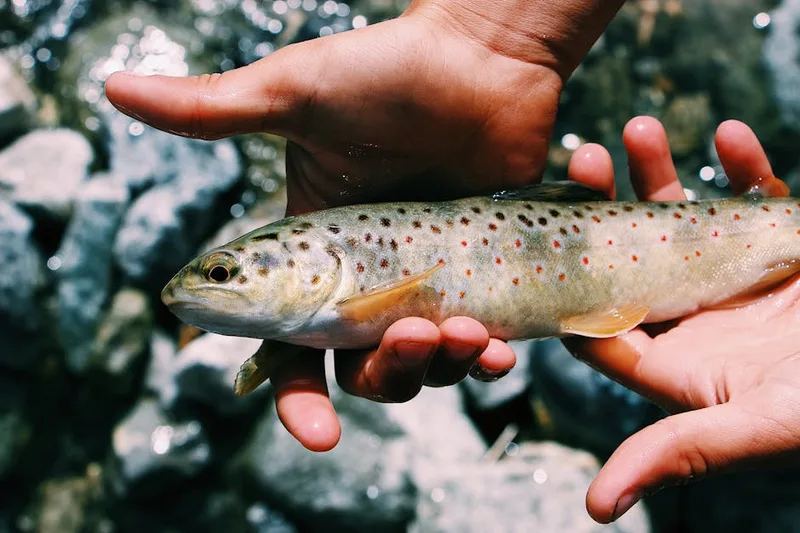
Most spinning reels sold at big-box stores come pre-spooled with 8lb or 10lb monofilament. That line has a diameter around 0.28mm. It works fine for bass. It works fine for catfish.
For trout in clear water, it's like fishing with a garden hose.
Drop to 4lb fluorocarbon. The diameter shrinks to roughly 0.20mm. That 0.08mm difference doesn't sound like much. Underwater, it's the difference between a trout inspecting your lure and a trout spooking before you even see it.
On pressured, heavily-fished streams, the line diameter alone is what most anglers notice first. Two identical rods. Two identical Panther Martin spinners. One rigged with 6lb mono (0.23mm), the other with 4lb fluoro (0.20mm).
On pressured streams, that 0.08mm is the variable that decides whether a trout commits or turns away.
Why 2lb Line Isn't Crazy
Here's where most anglers push back. They hear "2lb line" and picture it snapping the moment a fish breathes on it. That fear made sense in 1995. It doesn't anymore.
Modern 2lb fluorocarbon and high-quality nylon lines are not what they were fifteen years ago. A good 2lb fluoro breaks closer to 3.5lb in the real world when tied with a proper knot.
That's enough for 90% of the trout you'll encounter in streams and small rivers.
Landing a fish in the high teens on 2-pound fluorocarbon takes care. Expect several long runs and a drag set light enough that you can barely feel it engage.
With the drag doing its job, the line holds.
The mistake most beginners make is setting drag too tight and then blaming the line when it breaks. With ultralight line, your drag becomes your best friend.
Set it at roughly 25% of your line's rated strength. For 2lb line, that's about 8 ounces of pull. You should be able to pull line off the reel with almost no resistance.
Let the fish run. That's the whole point.
The Setup That Actually Works
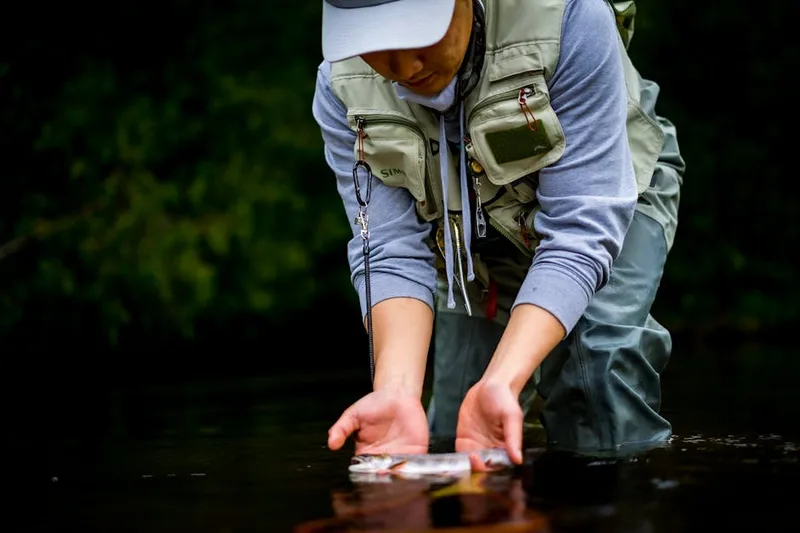
Here is the setup that covers the widest range of trout water:
Recommended Ultralight Trout Setup
- Rod: 5'6" to 7'0" ultralight or light power, fast action. The softer tip absorbs sudden runs that would otherwise snap 2-4lb line.
- Reel: Size 1000 spinning reel. Smaller reels balance better on ultralight rods and handle light line more smoothly.
- Main Line: 4lb fluorocarbon for all-around use. Drop to 2lb for ultra-clear spring creeks with heavily pressured fish.
- Leader: No separate leader needed with straight fluorocarbon. If you prefer braid main line, add a 5-foot fluorocarbon leader in 4lb.
A size 1000 reel matters more than most realize. Larger spools create more friction on light line during the cast. A size 1000 spool lets 4lb line peel off cleanly with minimal resistance.
Moving from a size 2500 to a size 1000 is where that shows up: less friction on the cast, more distance with the same 1/16 oz lure.
The Counterintuitive Truth About Casting Distance
Most anglers think lighter line always casts farther. That's wrong , up to a point.
With ultralight lures weighing 1/16 oz or less, 4lb line casts meaningfully farther than 6lb. The thinner diameter creates less air resistance and leaves the spool more freely. This makes intuitive sense.
But drop below 2lb and you hit a wall. The line is so thin that it digs into itself on the spool during the cast. Friction increases. Casts actually get shorter because the line can't peel off cleanly.
The baseline here is a 5'6" ultralight rod and a 1/16 oz Rooster Tail. Casting distance tracks line diameter, not just pound rating:
- 6lb mono (0.23mm): thickest of the three, and the shortest cast of the group
- 4lb fluoro (0.20mm): the sweet spot for distance with 1/16 oz lures
- 2lb fluoro (0.15mm): thinner still, but it digs into itself on the spool and loses ground
So 2lb out-casts 6lb but falls short of 4lb, because the thinnest line digs into itself on the spool. For maximum casting distance on open-water trout, 4lb is the sweet spot.
Knot Selection: Where Most Anglers Lose Fish
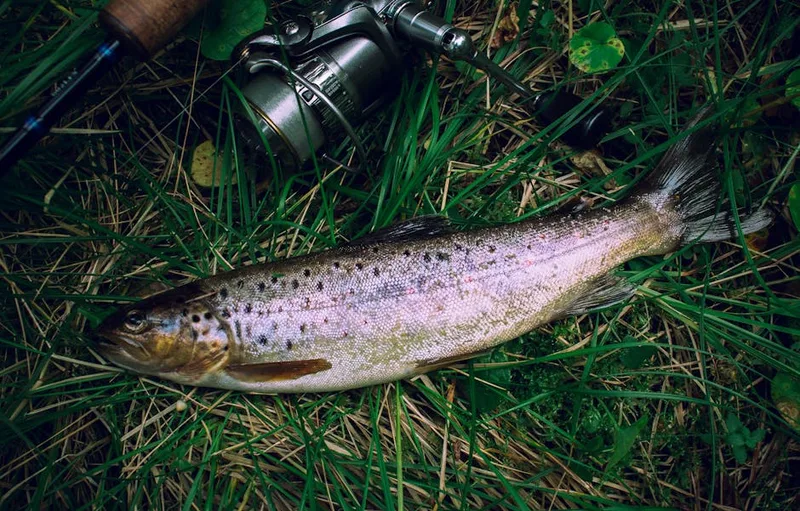
Light line demands good knots. A poorly tied knot on 4lb line might break at 2lb of pressure. A well-tied knot preserves up to 95% of the line's rated strength.
That's the difference between landing a trout and watching it swim away with your favorite spinner.
For fluorocarbon under 6lb, the Palomar is the knot to learn. It is simple, fast to tie with cold fingers, and typically delivers around 95% knot strength on 4lb fluoro.
The improved clinch knot, the one most of us learned first, is fine on mono but gives up more strength on light fluorocarbon than a knot tied in doubled line. That means you're losing a full pound of breaking strength on 4lb line.
In ultralight fishing, that one pound is everything.
Always wet the knot before cinching it down. Fluorocarbon generates heat under friction. Dry cinching can burn the line internally and create a weak point you won't see until it fails mid-fight.
A 16-inch rainbow past the leader into the net is exactly where a light line is most likely to fail — keep the pressure steady rather than popping the line.
When to Use 2lb vs 4lb vs 6lb
No single line weight works for every trout situation. Match the line to the conditions:
| Condition | Line | Diameter | Why |
|---|---|---|---|
| Ultra-clear spring creeks | 2lb fluoro | 0.15mm | Maximum stealth. Requires patience and light drag. |
| Clear streams & rivers | 4lb fluoro | 0.20mm | Best all-around choice. Invisible enough, strong enough. |
| Slightly stained water | 6lb fluoro | 0.23mm | Extra insurance against snags and sudden runs. |
| Tight brush cover | 6lb braid + 4lb leader | 0.10mm / 0.20mm | Braid cuts through vegetation. Leader keeps it invisible. |
| Lake fishing from shore | 4lb fluoro | 0.20mm | Long casts. Invisible enough for spooky lake trout. |
Two Lines Worth a Permanent Spot
Two lines are worth keeping on hand for ultralight trout work, for different reasons.
Seaguar Grand Max Fluorocarbon , 4lb
This is the line to reach for when a trip depends on everything working. The 200-yard spool runs about $28.
Expensive per yard, but the diameter is true to label and the knot strength is among the most consistent across brands.
In real-world use with a Palomar knot, the 4lb breaks closer to 5lb. it lays flat on UL rigs with minimal memory.
Check Price on AmazonTrout Magnet SOS , 2lb
For anglers ready to try sub-4lb fishing. This Japanese-market line handles shock better than any 2-pound line. A 165-yard spool costs around $12.
The trade-off: it runs slightly thicker than premium fluoro at the same rating. Still, for the money, it's the best entry point into ultralight territory.
On a dedicated spring creek rod it is an inexpensive line to run, and cheap to replace when it wears.
Check Price on AmazonMistakes That Show Up on the Water Every Season
Don't fill your spool to the rim. Leave about 1/8 inch of spool lip showing. Overfilled spools on size 1000 reels create wind knots that will ruin your afternoon.
Overfilled spools are the usual reason bank anglers end up fighting wind knots.
Don't use a leader heavier than your main line. This seems obvious.
Running 4lb main line to a 6lb leader "for abrasion resistance" defeats itself. When you snag, the main line breaks and you lose the leader anyway. Match or go lighter.
Don't store your rod with tension on the line. Light fluorocarbon develops memory quickly. Open the bail when you're done. Let the line relax.
Leave a fresh spool of 4lb fluorocarbon tensioned in a rod holder and the memory sets in within a couple of weeks.
If you fish with braid, always use a fluorocarbon leader for trout. Color does not save you here. Trout see it. On pressured water, even a 3-foot leader makes a difference.
A 6lb braid main line with a 5-foot 4lb fluoro leader is the small-stream combo: the braid handles well on a size 1000 reel, and the leader makes the presentation invisible where it counts.
For more on this setup, read our guide on fluorocarbon leader length , the principles apply to trout.
FAQ
Can I use 4lb line for stocked trout in lakes?
Yes, and that's exactly where it shines.
Stocked trout in clear lakes are often more line-shy than wild fish , they've seen more lures. 4lb fluoro on a 6'6" light rod is the ideal stocked-trout setup. Cast farther than the bank crowd.
Use 1/8 oz Kastmasters or small spoons. Let the line's invisibility do the work.
Does line color matter for trout?
Yes, more than most anglers admit. Use clear fluorocarbon or low-vis green for main line. Trout have excellent color vision, especially in the blue-green spectrum.
High-vis yellow or orange main line should always be paired with a fluorocarbon leader of at least 4 feet. For straight fluorocarbon, choose clear over any tinted option.
On a sunny day with 6-foot visibility, trout refuse a gold Kastmaster on high-vis line and hit the same lure on clear fluoro.
For more detail, check our trout line guide.
How often should I replace ultralight line?
Every 30-40 hours of fishing, or whenever the line feels rough when you run it between your fingernails. Light fluorocarbon degrades from UV exposure and micro-abrasions from rocks and gravel.
Replace 2lb and 4lb spools every six weeks during trout season, even when the line still looks fine. A $12 refill spool costs less than losing one good fish.
What's the best rod length for ultralight trout?
6'6" is the sweet spot for most situations. Shorter rods (5'0" to 5'6") excel in tight, brushy creeks where backcasting room is limited.
Longer rods (7'0" to 7'6") give you better casting distance on open water and more shock absorption during fights. If you own only one ultralight trout rod, make it a 6'6" fast action.
The extra length over a 5-footer gives you real advantages in line control and hook-setting leverage.
Sources & Industry References
- International Game Fish Association (IGFA) , Official world record authority and fishing line standards reference
- Wired2Fish , Independent fishing gear reviews and line testing data
- Tackle Warehouse , Comprehensive fishing line specs, diameter charts, and user reviews
Found This Guide Helpful?
Check out LineCalc Pro , our free fishing line calculator that recommends the perfect line for your exact setup. No guessing, no wasted money.
Try LineCalc Pro →