Table of Contents
- When You Can't See Your Line, You Miss Fish
- Why Your Daytime Line Fails at Night
- What Makes Fluorescent Mono + Black Light the 40-Year Gold Standard?
- Braid + Fluoro Leader: When Sensitivity Wins Over Visibility
- Which Setup Should You Actually Use?
- Which Lines Are Worth Your Money for Night Fishing?
- What Pound Test for Night Fishing?
- Night Fishing Line Mistakes to Avoid
- FAQ
The scenario plays out the same way on most night trips. The line is invisible in the darkness, and a tap registers. Or was it a tap?
There is no way to see whether it is moving, twitching, or sliding sideways. Swing on instinct and connect with nothing. The worm is gone.
The fish had taken the bait, felt the line, and spit it out before anyone knew it was there.
Add a $12 black light and a spool of fluorescent blue monofilament, and the line lights up like a neon sign above the water.
The first strike is seen before it is felt, the line jumping sideways a full second before the rod tip twitches. The difference is not skill or luck.
It was simply being able to see what was happening.
Night fishing changes everything about line selection. Visibility above the water becomes your most valuable asset. Below the surface, the equation shifts too.
Here's what works, what doesn't, and why the line in your spool right now might be the reason you blank after dark.
Why Your Daytime Line Fails at Night
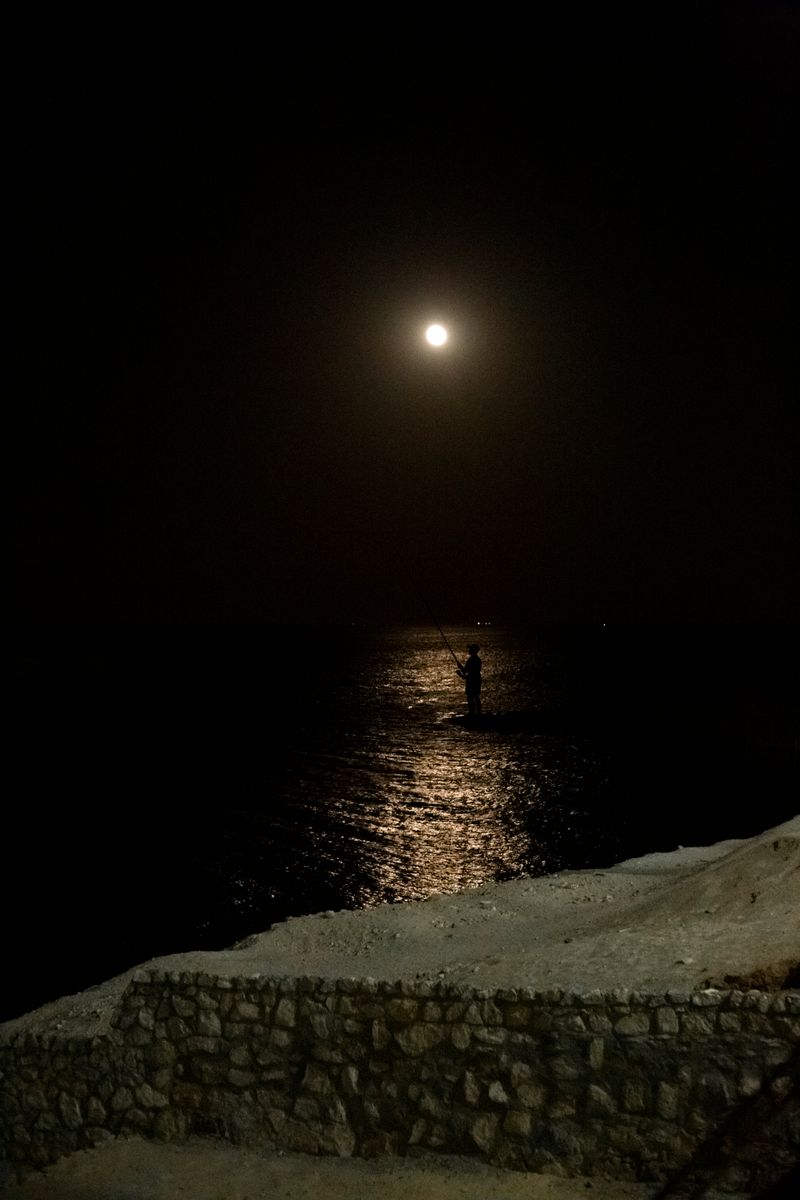
Every fishing line is designed for daytime visibility. Monofilament in green or clear is easy to track against the water when the sun is out. At night, that same line disappears. Completely. You are fishing blind.
This matters more than most anglers realize. According to veteran night fishing guides quoted by Outdoor Life, if you feel a bass pull, you are already too late.
The instant a fish detects pressure on the line, it spits the lure. At night, without being able to watch your line, you lose that critical half-second window between the bite and the spit.
Standard monofilament forces you to fish purely by feel. You will detect the hard hits.
But those soft pickups, the ones where a 5-pound bass just opens its mouth and inhales your bait without moving, those you will never feel.
Those are the fish you lose before you knew they were there.
Braided line solves the sensitivity problem but creates a different one. Braid is highly visible above water even in low light, and its zero-stretch construction transmits every bump to your hand.
But underwater, especially in clear conditions or under a bright moon, braid's visibility can work against you. Fish that would commit to a lure on fluorocarbon might flare off at the last second.
What Makes Fluorescent Mono + Black Light the 40-Year Gold Standard?
Here is the setup that night-fishing tournament anglers have relied on since the 1980s: fluorescent blue monofilament paired with a black light mounted on the boat or bank.
The physics is simple. Fluorescent line contains compounds that absorb ultraviolet light and re-emit it as visible blue light. A black light pumps out UV in the 365-395 nanometer range.
When that UV hits the line above the water surface, the line glows bright blue. You can see every twitch, every sideways slide, every subtle pickup.
Below the water surface, the line reverts to a standard translucent blue. Fish see it about the same as regular monofilament. The glow only happens above the water line.
This is the magic of the system: maximum visibility for you, normal visibility for the fish.
Wired2Fish fishing editor Jason Sealock writes about his night-fishing setup: "I personally use Stren Original in the fluorescent blue color for night fishing so it shows up against our black lights.
I really like it on my nighttime spinnerbait and jig rods when fishing at night in the summer." This is not marketing copy. This is what tournament anglers actually spool up.
Black light systems range from a simple $12 handheld unit you clip to the boat rail to full 360-degree boat-mounted systems from companies like Precision Sonar that run $200-300.
For bank fishing, a handheld black light flashlight is all you need. Point it at your line and cast into the glow zone.
Fluorescent Mono + Black Light Setup
- Line: 12-15 lb fluorescent blue mono on baitcasting gear, 8-10 lb on spinning
- Black Light: Handheld UV flashlight ($12-25) for bank fishing, boat-mounted LED bar ($80+) for boats
- Best species: Bass, crappie, walleye, catfish
- How to read: Line jumps sideways = fish picked up bait. Line goes slack = fish swimming toward you. Line tightens without moving = snag.
Braid + Fluoro Leader: When Sensitivity Wins Over Visibility
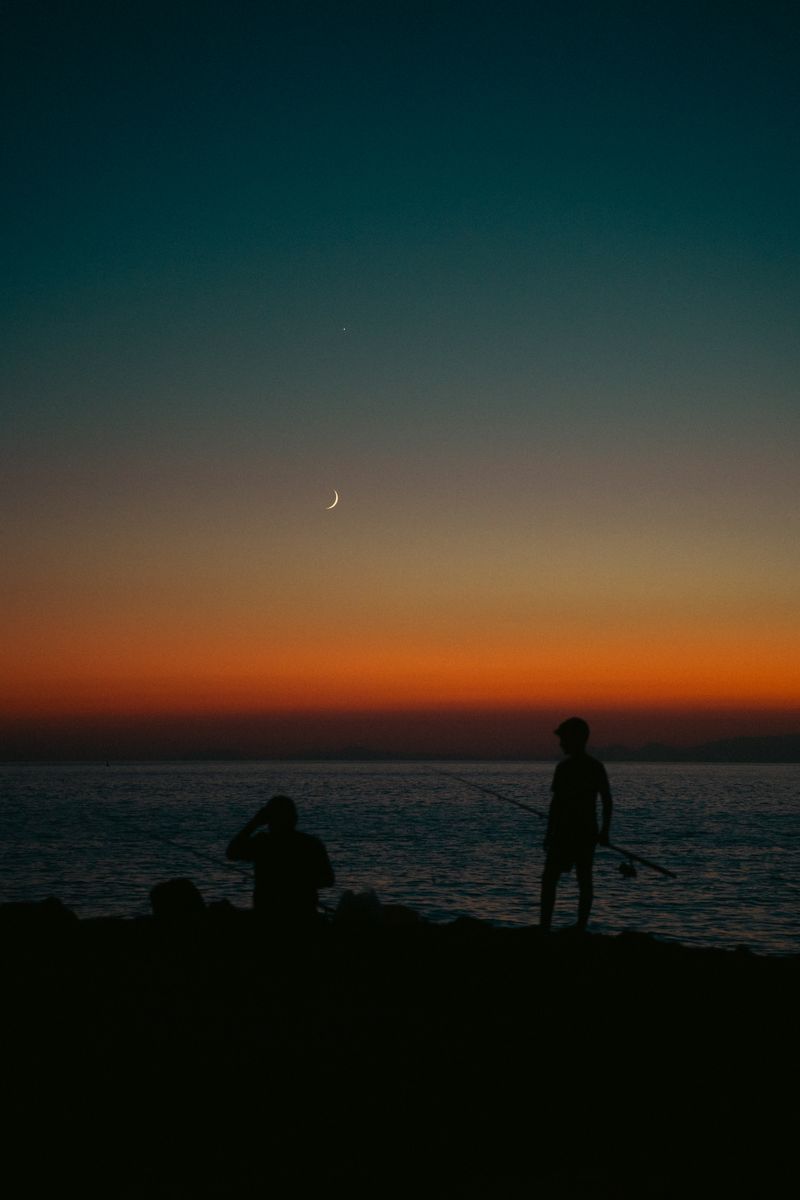
Fluorescent mono is the right answer for most night fishing. But it has a weakness: stretch. Monofilament stretches 15-25% under load. That stretch absorbs the subtle taps you are trying to detect.
In deep water or when fishing soft plastics on a slack line, fluorescent mono can still leave you guessing.
Braid has zero stretch. Every bump, every tick, every inhale transmits straight to your hand. At night, when you cannot see your line constantly, that extra sensitivity can be the difference between a hookset and a missed fish.
The trade-off, as always, is visibility. Straight braid is visible to fish. In stained water or around heavy cover, this matters less.
Bass holding tight to a dock piling at midnight are not inspecting your line. But in clear water under a full moon, a fluorocarbon leader of 18-24 inches improves your hookup ratio measurably.
Set up two identical rods with identical black spinnerbaits in clear water and the difference is easy to see. One rod is spooled with straight 30 lb braid.
The other runs 30 lb braid to an 18-inch 12 lb fluorocarbon leader tied with an FG knot. Over a night session, the leader rig is the one that keeps producing fish in clear water.
Not a perfect comparison. Fish that hit the straight braid tend to be more aggressive, slamming the lure at speed. The leader rig also gets those tentative pickups.
Braid + Fluoro Leader Setup
- Main Line: 20-30 lb braid (PowerPro or Sufix 832)
- Leader: 10-15 lb fluorocarbon, 18-24 inches
- Knot: FG knot or double uni. The FG knot is thinner and casts through guides better at night
- Best for: Deep water, soft plastics, clear water under moonlight, fishing around heavy cover
Which Setup Should You Actually Use?
Three things decide the setup: whether a black light is in play, water clarity, and how much cover the fish are sitting in. Here is the framework by scenario:
| Scenario | Setup | Line Spec | Why |
|---|---|---|---|
| Summer bass on boat with black lights | Fluorescent Mono | 12-15 lb | Best bite detection. Line glows like a laser. |
| Bank fishing, no black light | Braid + Fluoro Leader | 20 lb braid / 10 lb leader | Feel bites you can't see. Leader maintains stealth. |
| Clear water, full moon | Braid + Fluoro Leader | 20 lb braid / 10 lb fluoro | Fish are more line-shy. The leader is essential. |
| Stained water, heavy cover | Straight Braid | 30-50 lb | Visibility doesn't matter. Horse fish out of brush. |
| Crappie or walleye night fishing | Fluorescent Mono | 6-8 lb | Light bites need visual detection. Black light is king. |
| Catfish on the bottom | Fluorescent Mono | 15-20 lb | Line watching for subtle runs. Abrasion resistance. |
The single biggest factor is whether you have a black light. If yes, fluorescent mono is the better choice in almost every situation. If no, braid with a leader gives you the sensitivity to fish by feel.
Which Lines Are Worth Your Money for Night Fishing?
A lot of spools get burned through figuring out what holds up after dark. These three earned their spots.
Stren Original Clear/Blue Fluorescent
This is the line you see on every night-fishing boat in the country. The fluorescent blue color glows brilliantly under black light. A 330-yard spool of 12 lb runs about $8.
At that price, you can respool every six weeks during the summer without thinking about it.
The diameter is slightly thicker than premium lines at the same rating (12 lb = 0.33mm), but the visibility advantage more than makes up for it.
For spinnerbaits, jigs, and buzzbaits at night, this is the default choice for a reason.
Check Price on AmazonBerkley Trilene XL Fluorescent Clear/Blue
If Stren is the workhorse, Trilene XL is the upgrade. Berkley claims 20% greater flexibility than previous generations, and in practice this means fewer coils coming off the spool and smoother casting.
The fluorescent blue is slightly less bright under black light than Stren, but the handling is noticeably better on spinning gear. The 10 lb spool (300 yards, about $9) is the usual choice for spinning reels.
It lays flat on the spool with almost no memory, even after sitting for a week between trips.
For more on how line memory affects your fishing, see our guide on fixing mono line memory.
Check Price on AmazonPowerPro Braided Line + Seaguar Blue Label Leader
For the braid + leader setup, pair 20 lb PowerPro moss green as the main line with a 10 lb Seaguar Blue Label fluorocarbon leader.
PowerPro at 20 lb has a diameter of just 0.23mm, roughly the same as 6 lb monofilament.
This thin diameter cuts through the water with less resistance, which matters when you are feeling for bites in the dark. The Seaguar leader is the most consistent fluorocarbon tested for knot strength.
Tie it with an FG knot and the connection will not fail. A 150-yard spool of PowerPro runs about $15.
The 200-yard spool of Seaguar Blue Label runs about $22 and lasts a full season of leaders.
If you are new to braid, check our guide to spooling braid on a spinning reel before you start.
Check Price on AmazonWhat Pound Test for Night Fishing?
Night fishing is not the time to go light. Fish hit harder after dark. They run for cover faster. And you cannot see structure well enough to finesse them out of it.
For bass, bump up one line class from your daytime setup. If you throw 10 lb fluoro during the day, spool 12-15 lb fluorescent mono at night.
The extra strength is insurance against the fish that wraps you around a dock post you did not see. On baitcasting gear, 15 lb fluorescent mono handles everything from spinnerbaits to jigs to buzzbaits.
For crappie and walleye, 6-8 lb fluorescent mono on light spinning gear is ideal.
These species hit softly, and watching the line jump under a black light is far more effective than trying to feel those subtle bites in the dark.
For catfish, 17-20 lb fluorescent mono gives you the abrasion resistance needed for bottom fishing around rocks and timber.
Catfish don't care about line visibility, and the heavier line lets you put pressure on big fish without worrying about a break-off in the dark.
Night Fishing Line Mistakes to Avoid
Spooling brand new fluorescent mono just before a night trip is a common error. Six hours on the reel is enough for memory coils to form.
The first cast turns into a bird's nest that cannot be untangled in the dark.
Spool up the night before and stretch the line by tying it to a fence post and walking off 30 yards.
Running straight braid on a clear-water lake under a full moon is a mistake that shows up in the bite. Nothing hits until a fluorocarbon leader goes on. The leader matters when the moon is bright.
Skipping the abrasion check after an all-night session around rocky structure is a mistake that costs fish. The next trip, a 4-pound bass breaks off at the hook on the hookset.
Run your fingers along the last three feet of line after every hour of night fishing. If it feels rough, cut and retie. You cannot see the damage in the dark.
For more on when to replace your line proactively rather than waiting for a break-off, read our guide on when to change your fishing line.
FAQ
Do I need a black light for night fishing?
A black light is not mandatory, but it is the single biggest upgrade you can make. When paired with fluorescent blue monofilament, the line glows bright blue above the water surface.
You see the line twitch, jump, or move sideways before you feel the bite. For bass and crappie fishing after dark, anglers using black lights consistently detect more strikes than those relying on feel alone.
A basic handheld black light flashlight costs $12. It pays for itself the first time you catch a fish you would have missed.
Can I use braided line for night fishing without a leader?
You can, but you will miss bites in clear water. Braid transmits every bump directly to your hand, which is excellent for sensitivity. But braid is visible to fish.
At night, fish rely on their lateral line and sense of smell, not sight. In stained water or heavy cover, straight braid works fine.
In clear water or under a full moon, a fluorocarbon leader of 18-24 inches improves your hookup ratio. Anglers see this play out on the water more than once.
What pound test is best for night bass fishing?
For largemouth bass at night, 12-15 lb fluorescent monofilament on baitcasting gear is standard. For spinning gear, 8-10 lb fluorescent mono or 15-20 lb braid with a 10-12 lb fluorocarbon leader.
Bump up to 17-20 lb around heavy timber or docks where bass wrap you up fast in the dark. Night bass hit harder and run for cover immediately.
Err on the heavier side compared to your daytime rig.
Does fishing line color matter at night?
Above the water, line color matters more at night than during the day. Fluorescent blue or clear blue monofilament glows brilliantly under a black light, making it easy to track.
Below the water, color matters less at night because fish cannot see the line in darkness regardless of its color.
The exception is clear water under a full moon, where a fluorocarbon leader still provides a stealth advantage over straight fluorescent mono. For more on line color science, see our braid line color guide.
Sources & Industry References
- Outdoor Life, bass night fishing expert roundtable with black light and fluorescent line recommendations
- Wired2Fish, independent fishing gear reviews and editor Jason Sealock's night-fishing line testing data
- Tackle Warehouse, industry-standard line specs, diameter charts, and fluorescent line product data
Related guides: Best Bass Fishing Line Guide , Common Fishing Line Problems , Braid vs Mono: The Complete Guide
Found This Guide Helpful?
Check out LineCalc Pro, our free fishing line calculator that recommends the perfect line for your exact setup. No guessing, no wasted money.
Try LineCalc Pro →